The Complete Website Redesign Checklist for Detroit Businesses in 2026
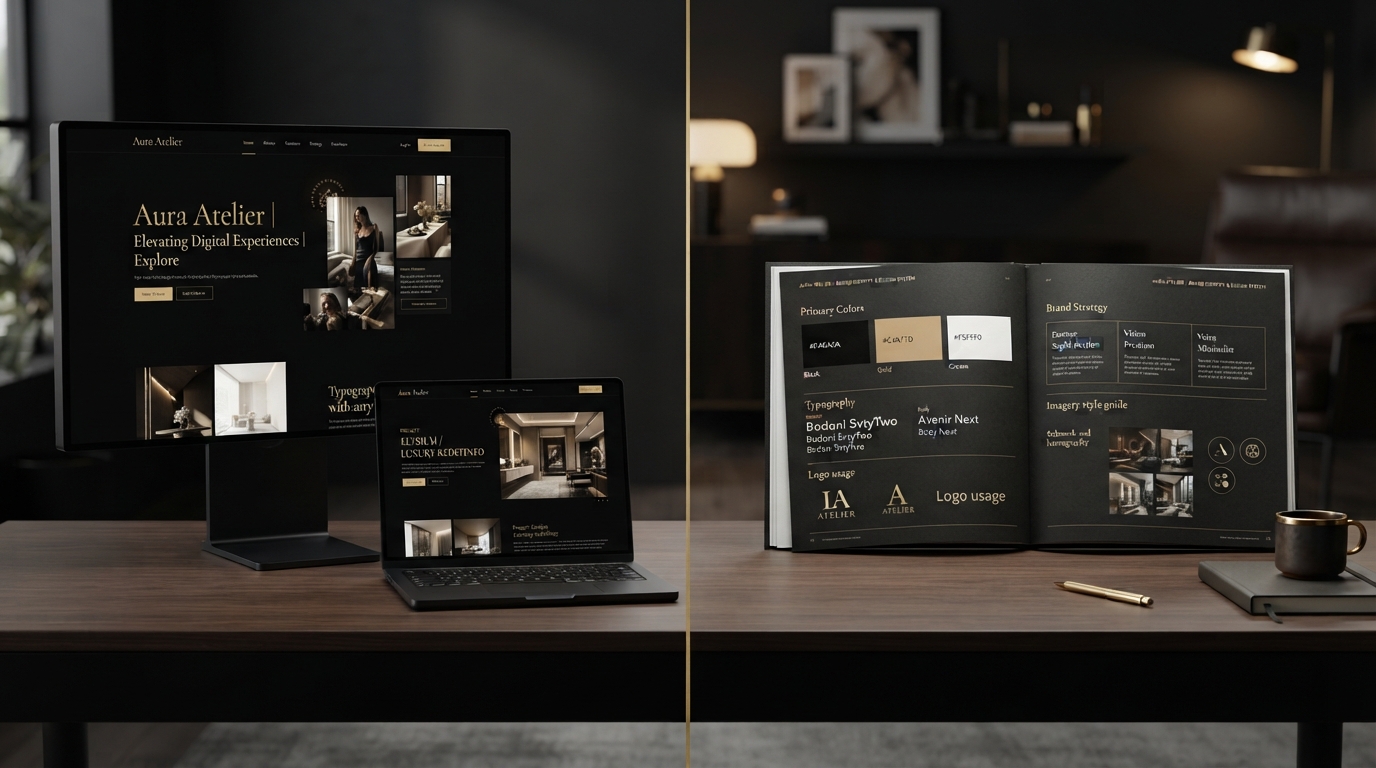
A website redesign is one of the highest-stakes projects a business can undertake. Done right, it transforms your digital presence and accelerates growth. Done wrong, it destroys years of SEO equity, confuses customers, and wastes tens of thousands of dollars. I've led redesigns for brands ranging from luxury hotels to Detroit restaurants, and the difference between success and failure always comes down to planning.
Key takeaway: A successful website redesign protects what you've built (SEO, brand equity, customer familiarity) while improving what isn't working (conversion, performance, mobile experience, CRM integration).
Phase 1: Audit and Strategy
Before touching design, audit your current website. What's working? What's not? Which pages get traffic? Which pages convert? Use Google Analytics and Google Search Console to understand your current performance.
- Document current organic traffic and top-performing pages
- Identify pages with backlinks that must be preserved
- Audit current conversion rates and lead sources
- Review competitor websites for benchmarking
- Define clear business goals for the redesign
- Review and update brand identity if needed
Phase 2: SEO Migration Planning
This is the phase most agencies skip — and it's the one that causes the most damage. Every URL on your current site that has organic traffic or backlinks needs a redirect plan. If you change your URL structure without proper 301 redirects, Google treats those pages as deleted, and your rankings drop overnight.
Our SEO services include comprehensive migration planning. We map every old URL to its new equivalent, preserve metadata, and monitor rankings post-launch. Read our Local SEO Framework for more on protecting local search visibility.
Phase 3: Content Strategy
Your new website needs content that serves both users and search engines. That means: keyword research to identify what your customers actually search for, clear page hierarchy, compelling headlines, and conversion-focused copy. Don't just copy old content to a new design — use the redesign as an opportunity to improve your messaging.
Read our Content Planning Guide for a framework on building content that ranks and converts.
Phase 4: Design and UX
Design should follow strategy, not lead it. The visual design should reflect your brand identity, guide users toward conversion actions, and work flawlessly on mobile. In my work with SLS Hotels and W Resorts, design wasn't about looking pretty — it was about creating an experience that felt like the brand.
- Mobile-first responsive design
- Clear visual hierarchy with primary CTAs
- Consistent brand application across all pages
- Accessible color contrast and typography
- Fast-loading images with proper optimization
Phase 5: Development and Integration
This is where House of Karma's partnership with Studio Escrow sets us apart. We don't just build a website — we connect it to your CRM, your automation workflows, your analytics, and your lead follow-up systems. Every form submission is captured, routed, and followed up automatically.
Explore our CRM and automation services and web design services to see how we build connected systems.
Phase 6: Testing and Launch
- Test all forms and CRM integrations
- Verify all 301 redirects are working
- Run Core Web Vitals performance audit
- Test on multiple devices and browsers
- Submit updated sitemap to Google Search Console
- Monitor rankings and traffic for 30 days post-launch
Phase 7: Post-Launch Optimization
Launch is the beginning, not the end. Monitor user behavior, conversion rates, and search performance. A/B test headlines, CTAs, and page layouts. Update content regularly. Your website should evolve with your business. Read our Core Web Vitals guide for ongoing performance optimization.
FAQ
How long does a website redesign take?
A professional redesign typically takes 6 to 12 weeks. Small business sites may take 4 to 6 weeks, while complex e-commerce or custom applications can take 3 to 6 months.
Will I lose my SEO rankings during a redesign?
Not if proper redirects, URL mapping, and SEO migration planning are implemented. A well-executed redesign should preserve or improve rankings.
How much does a website redesign cost in Detroit?
Detroit website redesign costs range from $5,000 for small business refreshes to $50,000+ for complete custom rebuilds. See our pricing guide.
Should I redesign or start from scratch?
It depends on your current site's technical foundation and SEO equity. If you have strong organic rankings, a strategic redesign preserving URLs is better. If the site is fundamentally broken, a rebuild may be more cost-effective.
Planning a website redesign?
House of Karma handles strategy, design, development, SEO migration, and CRM integration — all under one roof.
Get a Redesign ConsultationRelated reading: Best Web Design Companies in Detroit, Web Design Cost Guide, and Why Beautiful Websites Fail. Follow Mohamad Fardous on Instagram @moedeuce.
Sources & Further Reading

Continue Exploring
The Playbook
Explore more insights, guides, and frameworks for sustainable business growth.
Read The PlaybookOur Services
See how we turn these strategies into scalable infrastructure for our clients.
View All ServicesReady to scale your brand?
Stop losing leads and start converting traffic. Book a working session with our Detroit-based team to uncover the gaps in your current strategy.